

Speeding has become a key concern in relation to school zones, residential roads, and other road sections where both drivers and pedestrians need to coexist. Traffic signs have speed limit markers, but they do not allow you to know the speed of your vehicle by reading them. A radar speed sign with driver feedback solves the problem by measuring the speed of approaching cars and displaying the result in real time.
Visibility of the speed allows drivers to get the information and to correct their driving speed if necessary. Road owners, traffic officials, and property management companies are allowed to raise speed awareness in drivers without using the power of law enforcement constantly.
1. Quick Learn— a Radar Speed Sign with Driver Feedback
A radar speed sign with driver feedback is an electronic traffic control device intended to enhance road safety. It uses radar technology to measure the speed of passing cars and shows the results on its digital display. Each speed limit sign model may display a different range of information. The device either displays the measured speed, flashes when the vehicle passes at excessive speed, or shows other messages based on certain thresholds. While traditional speed limit signs indicate the permitted speed, this speed display sign provides drivers with immediate information about their actual speed.
Key Components of a Radar Speed Sign
A typical system consists of several integrated components:
- Radar sensor: Detects moving vehicles and calculates their speed using reflected electromagnetic signals.
- LED display: Shows the measured speed using illuminated digits that can be read by approaching drivers.
- Control unit: Processes speed measurements and determines which display response to activate.
- Power supply: Uses grid electricity, batteries, solar panels, or a combination, depending on the installation.
- Mounting structure: Secures the sign to a pole or roadside support at a suitable height and angle.
A Radar Speed Sign with Driver Feedback can also come with such features as data logging, wireless communications, programmable threshold speeds, or remote programming. However, the options available may vary between models, so buyers should review the specifications of the selected device before purchasing.
2. How Does a Driver Feedback Radar Speed Sign Operate?
A Radar Speed Sign with Driver Feedback usually operates through a series of three operations. Namely, they detect vehicles, measures their speed, and gives a proper response. A Radar Speed Sign with Driver Feedback completes all these operations automatically and thus can give feedback without the intervention of an officer.
Detecting Vehicle Speed with Radar Technology
Radar sensors send out waves that bounce off any approaching traffic. Due to the Doppler effect, there is a slight change in the frequency of the wave when it reflects from a moving car. Using the difference in frequencies, it becomes possible for the detector to determine the speed of the vehicle.
If the speed of a vehicle moving at 45km/h exceeds the speed limit of 30km/h by 15 km/h, the sign can measure the distance. Several elements affect the ability of the sensor to detect. Relevant factors include the sensor design, the angle at which it is installed, the movement of vehicles, and surrounding conditions.
Displaying Real-Time Speed to Drivers
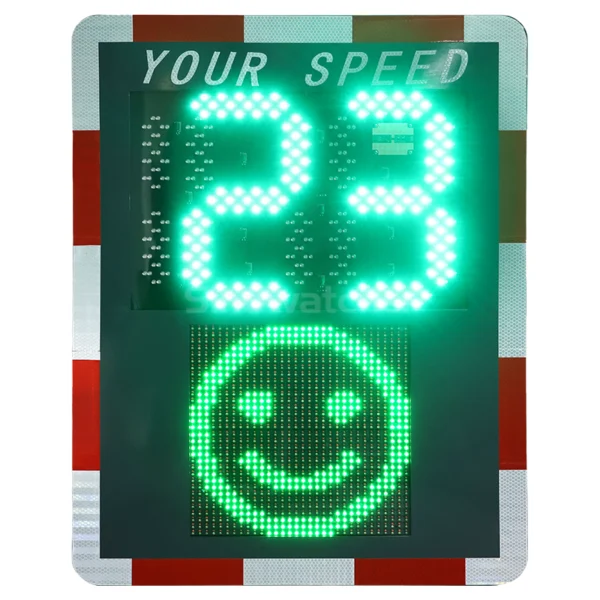
Once a moving vehicle’s speed has been determined, the controller delivers the corresponding information to the LED display. Display digits have to be clearly visible from a distance. By presenting real-time speed information, the sign enables drivers to assess their current speed against the applicable speed limit and recognize the need to slow down.
However, poor display visibility or unclear speeding warnings can make it difficult for drivers to respond promptly, especially on busy roads or under changing light conditions. Sinowatcher’s radar speed sign with driver feedback features a dual-color LED display that helps distinguish normal speed readings from speeding warnings. To ensure the sign remains clearly visible across various road environments, buyers should evaluate its digit size, viewing angle, contrast, and brightness.
Activating Visual Warnings for Speeding Vehicles
Most of the signs include a programmed threshold that determines when visual warnings are needed. The display, for example, can show a vehicle’s speed without flashing under normal conditions, then activate flashing digits when the speed limit is exceeded.
Moreover, there can be another threshold where a more powerful warning can be provided for vehicles traveling above 10 km/h over the posted limit. These numbers represent an example of the threshold setting, which does not always have to correspond to those numbers.
For a radar speed sign with driver feedback to be effective, the feedback it provides must be clear and easy for drivers to interpret. It is not reasonable to use excessive blinking or complicated messages because they can distract the road user.
3. What Are the Benefits of a Radar Speed Sign with Driver Feedback?
The usefulness of such devices is that they offer drivers information about their driving. The performance of these devices is affected by various factors, including location, visibility, and the level of traffic.
Encouraging Drivers to Reduce Speed
The motorist may fail to notice the gradual increase in speed, especially on wide roads and downhills. The display of the actual speed of the vehicle makes the driver aware of the speed at which he or she is currently moving relative to the speed limit and will help them adjust without interfering with traffic.
The use of a radar speed sign along with driver feedback will help the commuter become conscious of the speed. But this device will only be effective depending on location and traffic conditions. Its effectiveness can be evaluated by comparing the data on vehicle speed before and after installation.
Improving Road Safety in High-Risk Areas
These signs are commonly installed in locations where excessive speed creates additional risks, including:
- School zones: Encourage drivers to observe reduced speed limits near children and pedestrian crossings.
- Residential streets: Reinforce speed awareness where vehicles share the road with pedestrians and cyclists.
- Construction Zones: Encourage drivers to proceed cautiously and slow down near road workers and temporary traffic arrangements.
- Sharp curves and approaches to intersections: Provide an additional visual reminder before drivers enter potentially hazardous sections.
It can work together with existing signs, markings on roads, traffic calming, and enforcement rather than being considered a substitute for proper road design or other safety interventions.
Supporting Traffic Data Collection and Analysis
Some of these systems have the capability of storing vehicle speeds, traffic levels, times and dates of operation, among other information about their operation. Such information assists in assessing road conditions as well as determining times of increased incidence of speeding.
| Data metric | Practical application |
| Average vehicle speed | Evaluate general traffic behavior |
| 85th-percentile speed | Assess the speed below which 85% of measured vehicles travel |
| Vehicle count | Understand traffic volume by time period |
| Speed distribution | Identify the frequency and severity of speeding |
| Before-and-after measurements | Evaluate changes following installation |
For instance, a road authority can compare speeds at different times, for example, during weekday mornings with evening speeds. A radar speed sign with feedback which allows exporting the stored data or remote accessing of the system makes this task easier, depending on the model used. In interpreting the findings, the sample size, seasonality of traffic, among others, need to be taken into account. Lowering the average speed does not imply lowering the accident rate.
4. Conclusion
A radar speed sign that provides feedback to drivers is a combination of radar detection, instantaneous speed display, and customizable warning alerts that enable drivers to be better informed about their speeds. Additional options available in certain models include data gathering and remote management capabilities, which can be used for long-term traffic monitoring purposes. Such speed signs can enhance speed control in school zones, residential neighborhoods, and other hazardous locations. Should you require more details about our products, installations, and traffic safety systems, please contact us at Sinowatcher.
0