

For Robotaxis that travel around city streets without a person driving via the steering wheel and brakes, much more is required than simply recognizing the car in front. People who drive cars constantly check for signals from traffic lights, observe pedestrian movement, try to foresee the movements of others and find their place in traffic, and adjust their speed and direction accordingly. All of these actions have to be carried out by a Robotaxi in one system of hardware and software.
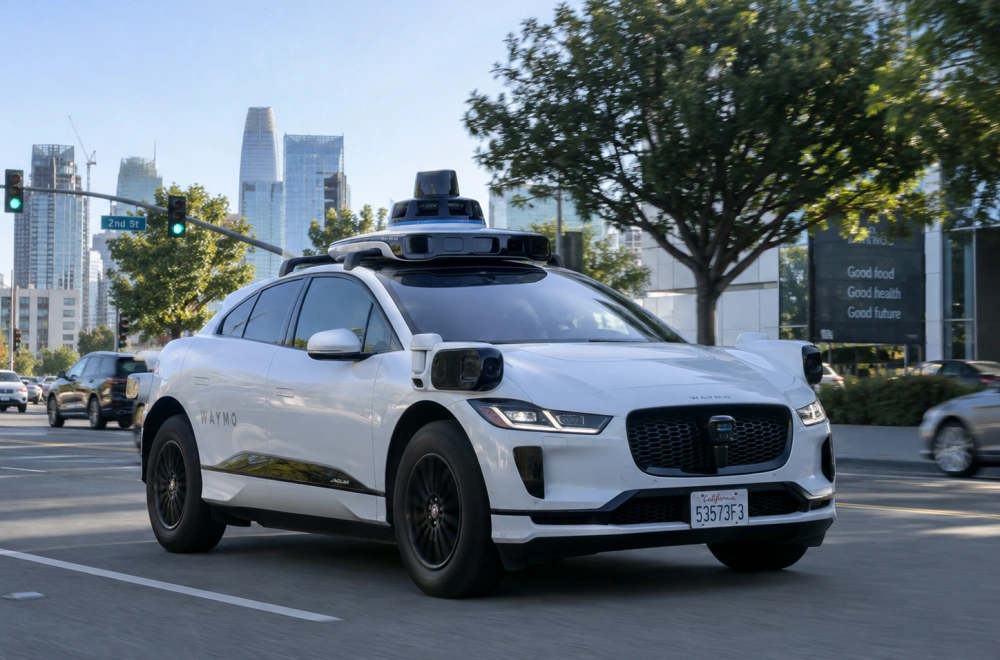
Information about the road is gathered using cameras, LiDAR, radar, and other sensors. Computers process this information, predict the actions of other people on the road, calculate the best route, and deliver commands to the systems responsible for the steering, brakes, and acceleration of the vehicle.
The vast majority of companies offering Robotaxi services use SAE Level 4 automation. That is, the car can carry out the driving process without the presence of a human driver in a defined Operational Design Domain (ODD).
1. How Does a Robotaxi See and Understand the Road?
How Cameras, Lidar, and Radar Cooperate
There is no perfect super sensor that takes the place of human eyes. There are different kinds of sensors that give us different kinds of data.
A camera helps us to detect:
• Traffic signals
• Lane markings
• Roadside signages
• Pedestrian
• Cyclist
• Other vehicles
If a camera works at a speed of 30 frames per second, it provides 30 images per second for the perception software to process.
But cameras are susceptible to problems like dark conditions, sunlight, fog, rain, or dirt on the camera lens. This is why Robotaxi uses LiDAR and Radar with cameras.
How Does LiDAR Measure Distance?
Light Detection and Ranging (LiDAR) fires laser beams towards nearby objects and calculates the time taken for the beam to be reflected back.
The fundamental equation involved is: Distance = Speed of Light x Time of Travel ÷ 2
The speed of light is 3 x 10⁸ m/s, and if the laser beam travels for 1 microsecond, then the distance is around 150 meters.
This is only an instance of how the process operates. The range of LiDAR depends on various factors such as hardware, weather, and target reflectivity, among others.
Tens of thousands or even millions of such measurements can be taken to create a point cloud, which will help the vehicle understand the geometry of the road and the location of nearby objects.
Why Is Sensor Fusion Important?
Radar gives us more information, especially distance and relative speed. Using different sensors gives the car an opportunity to cross-check the information that comes from them.
| Sensor | Main Function | Key Strength |
| Camera | Visual recognition | Signs, lights, lanes, objects |
| LiDAR | 3D measurement | Distance and spatial structure |
| Radar | Motion detection | Distance and relative speed |
| Ultrasonic | Short-range sensing | Parking and nearby obstacles |
Although the camera will be used to recognize the presence of a cyclist, LiDAR will be used to estimate its location in three dimensions, while radar will provide more details of movement.
Apart from answering the question of what an object is, the Robotaxi must estimate its location, behavior, and future actions.
2. How Does a Robotaxi Make Driving Decisions Without a Human?
Knowledge of the road is only the beginning. The car must be constantly converting sensor input into safe driving behaviors.
Localization: Knowing Exactly Where the Vehicle Is
Standard GPS technology on its own is not accurate and reliable enough in all situations for self-driving cars.
A robotaxi could use: GNSS + IMU + Wheel odometry + cameras + lidar + map data
High-resolution maps can have information about lane geometry, stop lines, crosswalks, curbs, and traffic light placement. The car can use this information in comparison with real-time sensor data to find its location and lane.
Predictions: What Will Others Do on the Roads?
Assume that there is a pedestrian at a distance of 22 meters from the vehicle in the vicinity of a crosswalk.
Just identifying the pedestrian is not enough; the system must predict whether the pedestrian would move into the street.
Some factors could be used for prediction: Position + Velocity + Direction + Context = Predicted Future Motion
This logic is true for any other moving object.
Planning: Choosing the Next Action
If a cyclist suddenly enters the Robotaxi’s lane, possible actions might include:
• Maintain speed
• Slow down
• Stop
• Change lanes
Traffic laws, probability of accidents, road geometry, motion equations, and predicted motions are considered in the planning module to determine the driving trajectory.
The process involved is: Perception → Prediction → Planning → Control
How Does the Computer Physically Drive the Car?
Drive-by-wire technology can be used by robotaxis to translate digital signals into physical actions by the car.
If the car must decelerate from 35 km/h to 20 km/h, the control system will determine the torque or braking force required. And if a turn is needed on the planned path, it will also instruct the steering angle.
The new chain of controls would be: Human to Computer to Control Module to Actuator to Car.
What Happens If Something Fails?
Driverless vehicles require redundancy in safety-critical systems such as:
• Steering
• Braking
• Computing
• Power supply
• Communication
Our objective is to ensure that a single error does not lead to the immediate loss of control.
In case the Robotaxi feels that it cannot continue any further, it could opt for the minimal-risk state: Detect Problem > Slow Down > Locate Safe Position > Stop
Knowledge about stopping safely is equally important as driving itself.
3. Why Can’t a Robotaxi Drive Everywhere Yet?
Robotaxis Operate Within an ODD
A Robotaxi’s capabilities are usually limited by its Operational Design Domain.
An ODD may define:
• Geographic area
• Road type
• Speed range
• Weather conditions
• Time of day
• Traffic conditions
A Level 4 Robotaxi that has worked properly in an urban area that it knows how to navigate cannot be presumed to function on an unknown mountain route, in an extreme blizzard, or under any other highway conditions.
In other words: Autonomous Driving ≠ Unlimited Driving
Weather Remains a Challenge
Rain, snow, and fog may create problems for perception as well. Snow can obscure lane markings; water or mud can block camera views, while poor weather conditions can degrade sensor data as well.
Thus, robotaxi systems require not only sensors but also: Sensor Cleaning + Fault Detection + Redundancy + Weather Detection
If the conditions are not within the operational envelope of the car, it is better to restrict its operations than to attempt to operate further.
What About Unexpected Situations?
There are some rare scenarios that exist on actual roads, such as roadworks, broken traffic lights, emergency vehicles, fallen objects, and hand signals by workers.
Some Robotaxi systems have capabilities for remote assistance in rare situations. But remote assistance does not always imply that there will be continuous manual control of the vehicle from an office desk.
Guidance could be from the remote operator, but actual braking and steering would still be done by the on-board system.
Remote Assistance ≠ Remote Driving
Conclusion
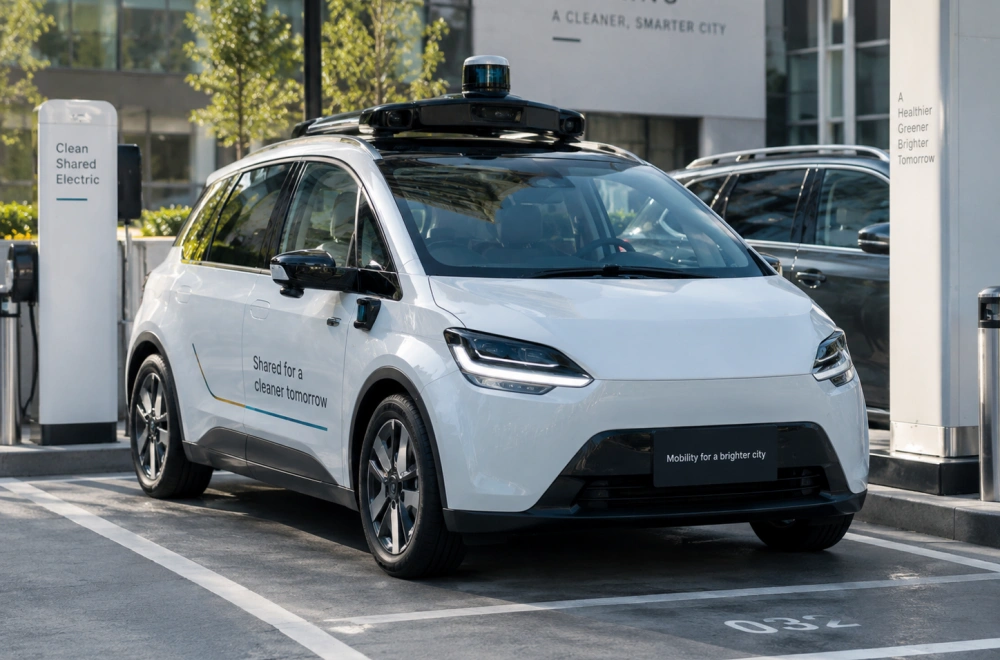
The Robotaxi operates without a driver through integration of perception, localization, prediction, planning, and vehicle controls. Camera, LiDAR, radar, maps, computing power, machine learning algorithms, and drive-by-wire technology all have their individual functions.
Nevertheless, the lack of a driver does not necessarily mean unlimited freedom. Robotaxis still operate within certain boundaries in terms of geography, environment, and technology. In reality, the true problem is not to develop a way of making a car operate without a driver but to develop ways for it to identify danger and make the right decisions in order to attain a safe position.
0