

Within the highly dynamic sector of solar energy and energy storage, inverters play an integral part in the performance of the system as a whole. Taking into consideration the growing need for green energy across the globe, there is growing curiosity among people to learn more about the best inverter brands.
It is important to understand that many companies manufacture specific kinds of inverters depending on their application, as there are utility-scale solar power plant inverters, commercial hybrid inverters, and domestic inverters. Knowing this information would certainly come in handy.
1. Role and Importance of Inverters
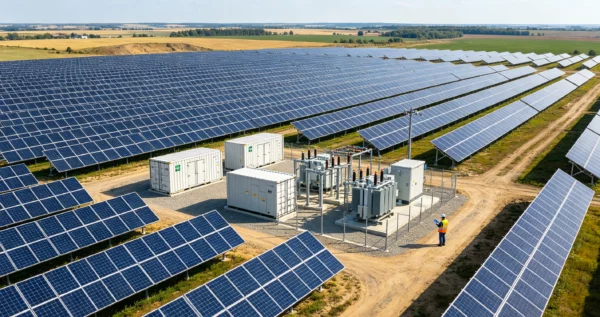
Solar inverters are more than energy converters. They form the core of the photovoltaic system, which means they control the flow of energy from solar panels into batteries, loads, and even the grid network.
Core Functions
- Regulation of energy transfer between solar, batteries, and the grid.
- Support on-grid and off-grid switching
- Stabilize voltage and system frequency
Key Performance Indicators
The inverter’s performance is defined through a number of technical parameters that have a direct impact on system performance.
| Key Indicator | Typical Range | Description |
| Conversion Efficiency | 95% – 99% | Measures how effectively DC power is converted into usable AC power |
| MPPT Efficiency | Up to 98% | Indicates how well the system tracks maximum solar power output |
| Switching Time | <10ms (advanced systems) | Speed of switching between grid, battery, and solar power |
| Service Life | 10 – 15+ years | Expected operational lifespan under normal conditions |
| Load Capacity | 100%–150% overload capability | Ability to handle peak power demand safely |
| Monitoring Capability | WiFi / Cloud / App control | Real-time system performance tracking |
These indicators are essential when evaluating the top 10 inverter brands, as they directly influence energy yield, system stability, and return on investment.
2. 2026 Market Overview of Top 10 Inverter Brands
The global inverter market in 2026 is structured into multiple layers based on technology level and application scenarios.
Market Characteristics
- Hybrid inverters have become mainstream
- Smart monitoring systems are used in over 70% of new installations
- IP65 protection level is now widely adopted as an industry standard
Application-Driven Competition
Instead of competing only on efficiency, top 10 inverter brands now focus on:
- System integration capability
- Energy storage compatibility
- Remote monitoring and cloud control
- Multi-mode operation flexibility
3. Top 10 Inverter Brands in 2026: Categorized Overview
Rather than being ranked, the top inverter brands listed below have been classified according to their positioning and applications.
3.1 Utility-Scale & Premium Brands
Brands:
- SMA Solar Technology (Germany)
- Fronius (Austria)
- SolarEdge (Israel)
These brands are widely used in large solar farms and high-end commercial projects. They are known for high conversion efficiency (97%–99%), strong grid compatibility, and advanced safety standards. Their systems are designed for long-term stable operation under demanding conditions.
3.2 Commercial & Industrial Energy Storage Brands
Brands:
- Huawei FusionSolar (China)
- Sungrow (China)
- GoodWe (China)
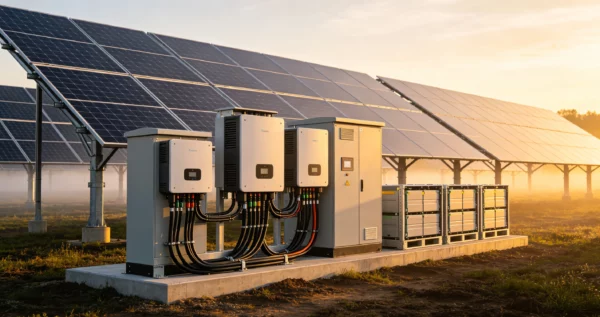
Such corporations lead the industry when it comes to the energy storage sector. These corporations have incorporated solar, battery storage, and smart grid energy management in their products, which can easily be used for industries, malls, and commercial buildings.
They are widely recognized in the top 10 inverter brands category due to strong system integration and digital energy control capabilities.
3.3 Cost-Effective Distributed Energy Brands
Brands:
- Growatt (China)
- Solis / Ginlong (China)
These brands focus on residential and small commercial systems. These offer cost-effective and highly efficient inverter technologies with efficiency levels ranging from 95%-97%, hence perfect for distributed solar systems.
3.4 Hybrid & Energy Integration Brands
Brands:
- Victron Energy (Netherlands)
- Felicity Solar (China)
This segment is mainly concerned with hybrid energy sources incorporating solar power, battery storage, and generators. In this case, Felicity Solar makes inverters that come in the categories of 3 kW, 5 kW, and above 20 kW, which are suitable for residential, commercial, and even some light industries.
4. Comparison of Top 10 Inverter Brands
| Category | Brands | Efficiency | Application | Key Strength |
| Premium Utility | SMA / Fronius / SolarEdge | 97%-99% | Large solar plants | High stability |
| Industrial Storage | Huawei / Sungrow / GoodWe | 96%-98% | Commercial systems | Smart energy control |
| Cost-Effective | Growatt / Solis | 95%-97% | Residential/small projects | Low cost |
| Hybrid Systems | Victron / Felicity Solar | 94%-97% | Off-grid & hybrid systems | Multi-energy integration |
5. How to Choose from the Top 10 Inverter Brands
Selecting the right inverter brand depends more on project requirements than on brand popularity.
5.1 Based on System Size
- Residential: 3kW–10kW
- Commercial: 10kW–50kW
- Industrial: 50kW+
5.2 Based on Functional Needs
- Is energy storage required or not
- On-grid / off-grid capability
- Remote monitoring requirement
- System expandability
5.3 Based on Stability Requirements
- High stability projects → premium brands
- Cost-sensitive projects → value brands
- Hybrid energy systems → integrated solution brands
6. Conclusion
The 2026 landscape of top 10 inverter brands reflects a highly diversified market structure, where different brands serve different energy needs rather than competing in a single ranking system.
Hybrid and energy storage inverter systems can be found in the form of Felicity Solar inverters. With global project experience and a complete product ecosystem, it provides practical solutions for modern solar energy systems.
When it comes to seeking guidance or consultancy for your projects on system selection, professionals are always there at your disposal for coming up with the best energy solutions.
7. FAQ
Q1: What should you consider most when selecting an inverter?
It is crucial to take into account efficiency, MPPT capabilities, system stability, and energy storage compatibility.
Q2: How do hybrid and regular inverters differ from each other?
The hybrid inverters are designed to regulate solar power, battery, and grid energy simultaneously, while regular inverters can only regulate solar energy.
Q3: Is it possible for inverter systems to function without a grid connection?
Yes, when combined with batteries and hybrid settings, the systems are able to function in off-grid mode.
Q4: How long does it usually take until inverters need replacing?
Generally, the lifetime of most inverters reaches 10 to 15 years, but good ones can exceed 20 years.
0