

Polyurea concrete coating is a high-performance protective layer specifically designed to enhance concrete surfaces. This coating is widely recognized for its fast curing time, strong adhesion, and exceptional resistance to wear and harsh environments. A key question often asked by engineers, facility managers, and builders is whether polyurea concrete coating can effectively protect floors from chemical damage. Given the increasing exposure of industrial floors to acids, solvents, oils, and cleaning agents, understanding their chemical resistance capabilities is essential for making informed material choices.
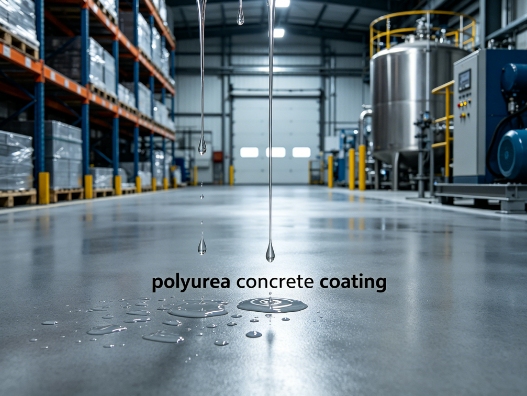
Excellent Chemical Resistance Performance
One of the most important advantages of polyurea concrete coating is its strong resistance to a wide range of chemical substances commonly found in industrial settings.
- Resistance to acids and alkalis: Polyurea forms a dense, seamless barrier that prevents acidic or alkaline substances from penetrating concrete surfaces, reducing corrosion risks.
- Protection against solvents: Industrial solvents such as acetone, fuel, and cleaning chemicals are effectively blocked by the coating’s non-porous structure.
- Oil and grease resistance: The surface prevents oil absorption, making it ideal for factories, garages, and food processing facilities.
- Stable Molecular Structure: The elastomer components ensure that the coating is not easily decomposed by chemical reactions.
Because of these properties, polyurea concrete coating is widely used in environments where chemical exposure is frequent and unavoidable.
Strong Protective Barrier Against Surface Penetration
Another key benefit of polyurea concrete coating is its ability to form a seamless, impermeable barrier that protects the underlying concrete from chemical intrusion.
- Seamless application technology: The spray-applied coating creates a continuous membrane without joints or weak points, preventing liquid seepage.
- Rapid curing process: The coating hardens within seconds, reducing the risk of contamination during installation and ensuring uniform protection.
- High elasticity and crack-bridging ability: Even when the concrete substrate shifts or cracks slightly, the coating maintains its integrity and continues to block chemical entry.
- Waterproof and vapor-resistant layer: In addition to chemicals, it also prevents moisture penetration, which often accelerates chemical degradation in concrete.
This barrier function makes it highly effective in extending the lifespan of industrial flooring systems.
Performance in Harsh Industrial Environments
The durability of polyurea concrete coating is especially evident in environments where floors are exposed to constant chemical stress and heavy usage.
- Chemical manufacturing plants: Floors are frequently exposed to corrosive substances, requiring long-term resistance and stability.
- Automotive workshops: Oil spills, fuel exposure, and cleaning chemicals demand a coating that can withstand repeated contact.
- Food and beverage facilities: Acidic ingredients, sanitizing agents, and frequent washing require hygienic and resistant flooring.
- Wastewater Treatment Facilities: Long-term exposure to corrosive chemicals and humid environments makes protective measures critically important.
In all these scenarios, polyurea concrete coating provides reliable protection that reduces maintenance frequency and repair costs.
Mechanical Strength Combined with Chemical Protection
Beyond chemical resistance, polyurea concrete coating also offers strong mechanical durability, which enhances its overall protective performance.
- High impact resistance: The coating absorbs shocks from heavy machinery or falling objects without cracking.
- Abrasion resistance: Continuous traffic from forklifts, vehicles, and equipment does not easily wear down the surface.
- Flexibility under stress: Unlike brittle coatings, polyurea maintains elasticity, preventing damage from structural movement.
- Long-term adhesion strength: It bonds tightly with concrete surfaces, ensuring long-lasting protection even under extreme conditions.
This combination of mechanical and chemical resistance makes it a comprehensive flooring protection solution.
Installation Efficiency and Long-Term Benefits
Another advantage of polyurea concrete coating is its fast installation process and long-term cost efficiency.
- Quick curing time: Floors can often return to service within hours, minimizing operational downtime.
- Reduced maintenance needs: Its resistance to chemicals and wear significantly lowers repair and replacement frequency.
- Cost-effective lifecycle performance: Although initial investment may be higher, long-term savings outweigh traditional coatings.
- Adaptability to different substrates: It can be applied to various concrete conditions, improving versatility in construction projects.
These benefits make it an attractive option for industries seeking both performance and efficiency.
Conclusion
In conclusion, polyurea concrete coating is highly effective in protecting floors from chemical damage due to its excellent resistance to acids, solvents, oils, and industrial chemicals. Its seamless structure, strong adhesion, and flexible durability allow it to create a long-lasting protective barrier that prevents chemical penetration and surface deterioration. Combined with its mechanical strength and fast installation advantages, it is widely used in industrial, commercial, and specialized environments. While no material is completely immune to extreme conditions, polyurea concrete coating stands out as one of the most reliable and advanced solutions for safeguarding concrete floors against chemical damage and extending their service life.
0