

Commercial bathrooms in hotels, office buildings, shopping malls, hospitals, and public facilities require high standards of hygiene, durability, and efficiency. Choosing the right soap dispensing solution is not only about appearance but also about functionality, maintenance cost, and user experience. Different environments demand different designs, and selecting the appropriate type can significantly improve cleanliness while reducing waste and operational workload. Many facility managers also consult a professional soap dispenser manufacturer to ensure the chosen products meet long-term performance requirements. Understanding the available types and their advantages helps businesses make more informed decisions for large-scale restroom installations.
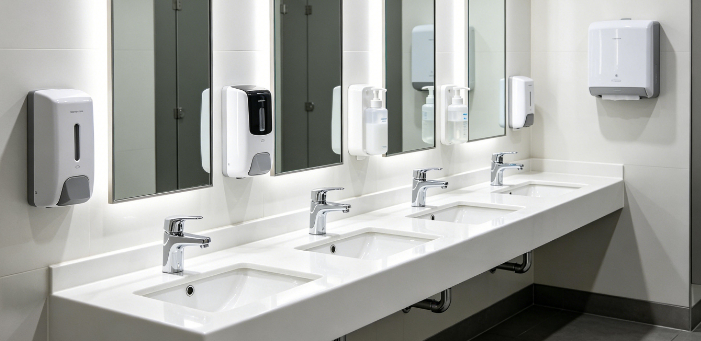
Manual Pump Soap Dispenser: A Simple, Cost-Effective, and Practical Solution
Manual pump soap dispensers are one of the most traditional and widely used options in commercial bathrooms. They are simple in structure and easy to operate, making them suitable for a variety of low to medium-traffic environments.
Key characteristics include:
- Basic mechanical operation: Users press the pump head to dispense soap, requiring no electricity or batteries, which makes installation flexible and maintenance straightforward.
- Cost efficiency advantage: These dispensers are generally more affordable upfront and easier to replace, making them ideal for budget-conscious facilities or small commercial spaces.
- Flexible refilling system: They can be filled with liquid soap, foam soap, or gel-based products, offering versatility for different usage preferences.
- Maintenance considerations: While easy to use, they may require more frequent cleaning to prevent clogging or residue buildup in high-use environments.
Products of this type are commonly used in small offices, cafes, and public restrooms with low foot traffic—specifically, in settings where highly automated functions are not required.
Automatic Sensor Soap Dispensers for High Hygiene Standards
Automatic or sensor-based soap dispensers are increasingly popular in modern commercial bathrooms due to their touchless operation and improved hygiene performance. They are especially suitable for environments where sanitation is a top priority.
Important features include:
- Touch-free operation system: Infrared sensors detect hand movement and automatically release soap, reducing direct contact and lowering the risk of cross-contamination.
- Controlled soap output: Many models are designed to dispense a fixed amount per activation, helping reduce waste and improve cost control.
- Battery or rechargeable power supply: These units typically operate using batteries or rechargeable systems, allowing flexible installation without complex wiring.
- High-traffic suitability: Ideal for hospitals, airports, and shopping malls where frequent use demands consistent performance and hygiene assurance.
Due to their advanced functionality, many facility planners work closely with a soap dispenser manufacturer to customize sensor sensitivity, capacity, and material selection.
Wall-Mounted Soap Dispensers for Space Optimization
Wall-mounted soap dispensers are designed to save counter space and improve restroom organization. They are widely used in commercial bathrooms where cleanliness and efficient layout are important.
Key advantages include:
- Large capacity design: Many models support bulk soap storage, reducing the frequency of refilling and improving maintenance efficiency in busy locations.
- Durable construction materials: Often made from stainless steel or high-strength plastic, they are built to withstand heavy use and prevent damage or corrosion.
- Enhanced aesthetic integration: Their streamlined design helps maintain a modern and uniform appearance in commercial restroom environments.
This type is commonly chosen for hotels, office buildings, and public facilities where both appearance and efficiency are important.
Foam Soap Dispensers for Efficiency and User Comfort
Foam soap dispensers have become increasingly popular in commercial bathrooms due to their efficient soap usage and pleasant user experience. They convert liquid soap into foam before dispensing, offering both cost and hygiene benefits.
Main points include:
- Reduced soap consumption: Foam technology mixes air with liquid soap, allowing users to achieve effective cleaning with less product per use.
- Improved washing experience: The soft foam texture spreads easily across hands, making it more comfortable and efficient for users.
- Eco-friendly advantage: Lower soap usage also means reduced packaging waste and environmental impact over time.
- Ideal for high-traffic environments: Suitable for schools, offices, and public restrooms where long-term cost efficiency is important.
Many commercial facilities choose this option after consulting a soap dispenser manufacturer to balance performance and sustainability needs.
Conclusion
Different types of soap dispensers serve different purposes in commercial bathroom environments. Manual pump dispensers offer simplicity and affordability, automatic sensor models provide the highest hygiene standards, wall-mounted designs maximize space efficiency, and foam dispensers deliver cost-effective and eco-friendly performance. Selecting the right option depends on traffic level, budget, hygiene requirements, and maintenance capacity. With careful planning and, when necessary, support from a professional soap dispenser manufacturer, businesses can significantly improve restroom hygiene, reduce operational costs, and enhance user experience in commercial facilities.
0