

FTTH Drop Patch Cords are vital components connecting fiber distribution points to end-user devices. Proper installation ensures signal quality and network stability, while errors can cause significant signal loss, physical damage, and costly downtime. This article covers essential techniques and best practices for installing FTTH Drop Patch Cords effectively.
Preparing FTTH Drop Patch Cords for Installation
Proper preparation reduces the risk of faults and signal degradation. The key steps before installation include:
- Inspection of Connectors
Before installation, inspect all connector end-faces using at least 200x magnification microscopes. Dirt, dust particles, scratches, or pits can increase insertion loss by up to 1 dB, which significantly affects systems with tight optical loss budgets such as GPON. Use proper fiber inspection tools to identify even microscopic contamination that can lead to network degradation. - Cleaning Procedures
Effective cleaning involves using lint-free fiber optic wipes and 99% isopropyl alcohol to remove any contaminants. Cleaning should follow a “one wipe, one direction” method to avoid redepositing particles. Field data shows that 35% of fiber network failures originate from unclean connectors, highlighting the critical nature of proper cleaning protocols. - Route Planning and Handling
Carefully plan cable routing to prevent tight bends or mechanical stress. G.657A2 bend-insensitive fibers maintain performance with a minimum bend radius of 7.5 mm; bending tighter than this increases optical attenuation by 0.1 to 0.5 dB per bend. Excessive pulling forces above 100 N can cause microbending or even fiber fractures, degrading signal integrity. Use pulling grips, cable reels, and strain relief boots to manage cable handling and avoid damage.

Installation Environment and Cable Selection
Choosing the right cable and adapting to environment requirements is critical for reliable installations:
- Indoor Residential Environments
Use flexible 2.0 mm diameter patch cords with LSZH jackets for ease of routing within walls and conduits. These cables withstand typical indoor temperatures from 0°C to 50°C. Routing away from electrical wiring reduces electromagnetic interference risks. - Commercial and Enterprise Settings
High-density environments require patch cords with insertion loss below 0.2 dB to avoid cumulative attenuation. Connectors should comply with IEC standards and endure at least 500 mating cycles to ensure longevity. Effective labeling and cable management facilitate easier maintenance. - Outdoor and Temporary Installations
For demanding environments, choose armored or ruggedized patch cords featuring UV-resistant jackets and tensile strength exceeding 300 N to ensure durability. Compliance with IEC 60794-1-2 ensures resistance to humidity over 95% and temperature extremes from –40°C to +85°C. Proper sealing and weatherproof connectors prevent moisture ingress.
Installation Best Practices for FTTH Drop Patch Cord
Adhering to mechanical and optical limits during installation protects fiber integrity:
- Maintain Minimum Bend Radius
Ensure bends are no tighter than 7.5 mm radius by using cable guides and conduits, especially at corners and transitions. Tighter bends increase signal attenuation by 0.1 to 0.5 dB per bend. - Limit Pulling Force
Pull cables with force below 100 N using strain relief boots and pulling grips. Use tension meters to monitor and prevent fiber damage caused by overstressing. - Handle Connectors Properly
Use connectors compliant with IEC 61754 standards and always cover unused connectors with dust caps to prevent contamination. Avoid applying excessive force during connections to preserve low insertion loss.
FTTH Drop Patch Cord Installation and Post-Installation Testing
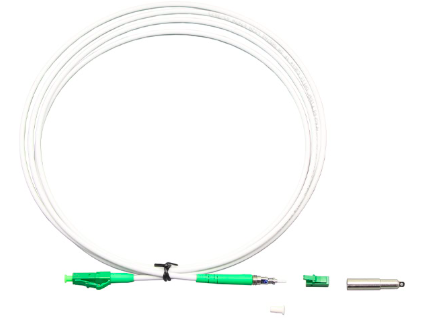
Comprehensive testing is vital to confirm installation quality and guarantee reliable network operation. Start by measuring insertion loss at both 1310 nm and 1550 nm wavelengths using calibrated optical power meters and light sources. The acceptable loss per patch cord should be below 0.3 dB to prevent significant signal degradation. Alongside insertion loss, verify the return loss values: UPC connectors should exceed 55 dB, while APC connectors should surpass 60 dB to effectively minimize back reflections that can cause noise and reduce transmission quality.
Visual inspection is equally important; use high-magnification microscopes to examine connector end-faces for any defects, scratches, or contamination larger than 1 micron that could impair signal integrity. Finally, employ Optical Time-Domain Reflectometers (OTDR) to precisely detect splices, fiber breaks, and bends with a spatial resolution as fine as 0.5 meters. This comprehensive testing process helps identify and address faults early, ensuring optimal network performance.
Addressing Common FTTH Drop Patch Cord Installation Issues
During installation, common problems include connector contamination, mechanical stress, and environmental exposure. Contamination is a frequent cause of failure, but strict cleaning protocols and proper technician training can reduce these issues by up to 30%. Mechanical stress from excessive pulling or bending can damage fibers, so using protective conduits and strain relief devices while monitoring pulling tension is vital. Additionally, environmental factors like moisture and UV exposure can degrade cables, making the selection of appropriate jackets (LSZH indoors, ruggedized outdoors) and weatherproof connectors essential for long-term reliability.
Conclusion
Proper installation of FTTH Drop Patch Cords is essential to sustain optimal fiber network performance and reliability. Comprehensive preparation, environment-specific cable selection, careful handling respecting mechanical and optical limits, and thorough post-installation testing ensure a stable, low-loss network. Adhering to these best practices reduces downtime and maintenance costs while delivering consistent high-quality fiber connections.
0