

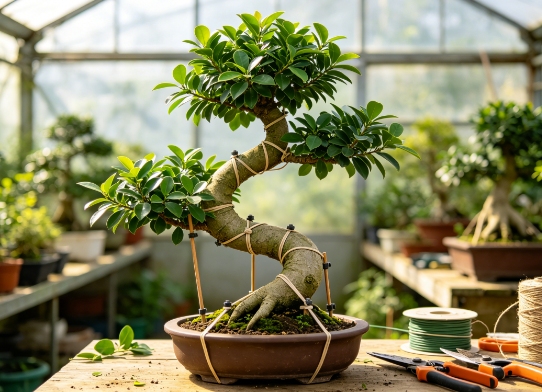
The S-shaped Ficus is one of the most popular styles of ornamental plants in modern landscape design and interior decoration. Known for its elegant curved trunk and lush green canopy, it is widely used in gardens, hotels, office spaces, and residential interiors to create a natural yet artistic visual effect. Unlike naturally growing straight plants, the S-shaped ficus is carefully trained over time through pruning, bending, and support techniques. Developing this unique form requires patience, proper tools, and an understanding of plant growth behavior. With the right methods, a young ficus plant can gradually be shaped into a graceful S curve that enhances both aesthetic value and landscape design quality.
Selecting the Right Ficus Plant for Shaping
Choosing a suitable plant is the first and most important step in successfully creating a ficus s shape structure. Not all ficus varieties respond equally well to shaping techniques.
- Young and flexible trunk selection: It is best to start with a young ficus plant because the trunk is still soft and easier to bend without breaking. Older plants are harder to train and may resist shaping.
- Healthy root system requirement: A strong root system ensures stable growth after bending and pruning, reducing the risk of stress-related damage.
- Straight initial growth stage: Although the final shape is curved, the plant should initially have a relatively straight trunk so that the S curve can be formed gradually and evenly.
- Disease-free condition: Plants must be free from pests, leaf spots, or fungal infections to ensure smooth adaptation during training.
Selecting the right plant material significantly increases the success rate of shaping and reduces long-term maintenance issues.
Core Techniques for Creating the S Curve Structure
Training a ficus s shape plant requires controlled shaping methods that gradually guide the trunk into a smooth curve rather than forcing sudden bends.
- Gradual bending with support stakes: Wooden or metal stakes are used to gently guide the trunk into a curved position. The plant is tied loosely and adjusted periodically as it grows.
- Directional light control: Ficus plants naturally grow toward light. By rotating the plant or adjusting the light direction, growth can be guided to support the S curve formation.
- Regular adjustment intervals: Ties and supports must be checked every few weeks to prevent cutting into the bark and to ensure the curve develops smoothly.
This step-by-step shaping approach helps achieve a natural-looking and balanced S curve without damaging the plant structure.
Pruning and Growth Control for Shape Maintenance
Pruning plays a critical role in maintaining the structure of a ficus’s shape and encouraging balanced foliage growth along the curved trunk.
- Remove Excess Branches: Any superfluous branches growing haphazardly in all directions should be pruned away to maintain the clean lines of the trunk and accentuate its “S” shape.
- Encouraging top canopy balance: Pruning the upper canopy ensures that leaf growth remains proportionate and does not overpower the curved trunk visually.
- Stimulating lateral growth: Strategic cutting promotes new shoots at desired points, helping create a fuller and more symmetrical appearance.
- Preventing overgrowth stress: Controlled pruning reduces nutrient competition within the plant, allowing energy to focus on shape development.
Consistent pruning ensures the plant retains its artistic form while remaining healthy and visually balanced.
Environmental Conditions and Ongoing Care
Proper environmental management is essential to support the long-term development of a ficus s shape plant and maintain its structural stability.
- Light requirements: Bright, indirect sunlight is ideal for steady growth without causing uneven stretching of the trunk.
- Watering balance: Overwatering should be avoided, as excessive moisture may weaken roots, while insufficient water can slow shape formation.
- Soil quality maintenance: Well-draining soil enriched with organic matter supports stable root anchoring during the bending process.
- Fertilization strategy: Moderate fertilization during the growing season encourages healthy foliage without causing uncontrolled growth that disrupts the shape.
Maintaining stable environmental conditions ensures that the plant continues to grow in the expected “S” shape without developing structural imbalances.
Common Challenges in Training Ficus S Shape Plants
Although shaping a ficus s shape plant is highly rewarding, several challenges may arise during the process that require careful management.
- Trunk cracking risk: If bending is too aggressive, the trunk may develop small cracks, which can weaken the structure over time.
- Uneven curve formation: Poor light control or irregular pruning may result in asymmetrical curves that require correction.
- Support damage issues: Improper tying methods can leave marks on the bark or restrict growth if not monitored regularly.
Understanding these challenges helps growers take preventive measures and maintain a healthy pruning process.
Conclusion
Training a ficus s shape plant into its unique curved form is a gradual and skill-based process that combines plant selection, controlled bending, pruning, and environmental management. With consistent care and proper techniques, the plant can develop into an elegant ornamental piece that enhances indoor and outdoor spaces. Although the process requires time and attention, the final result is a visually striking natural sculpture that reflects both horticultural skill and aesthetic design.
0